

Hidden Talents in Businesses – Neuroinclusion as a Competitive Advantage
On October 7, 2026, the Hungarian Economic Development Agency (MGFÜ) and the Hajdú-Bihar County Chamber of Commerce and Industry (HBKIK) held a joint professional event on the relationship between neurodiversity, inclusive workplace environments, and the competitiveness of businesses as part of the TASK4ISI project.
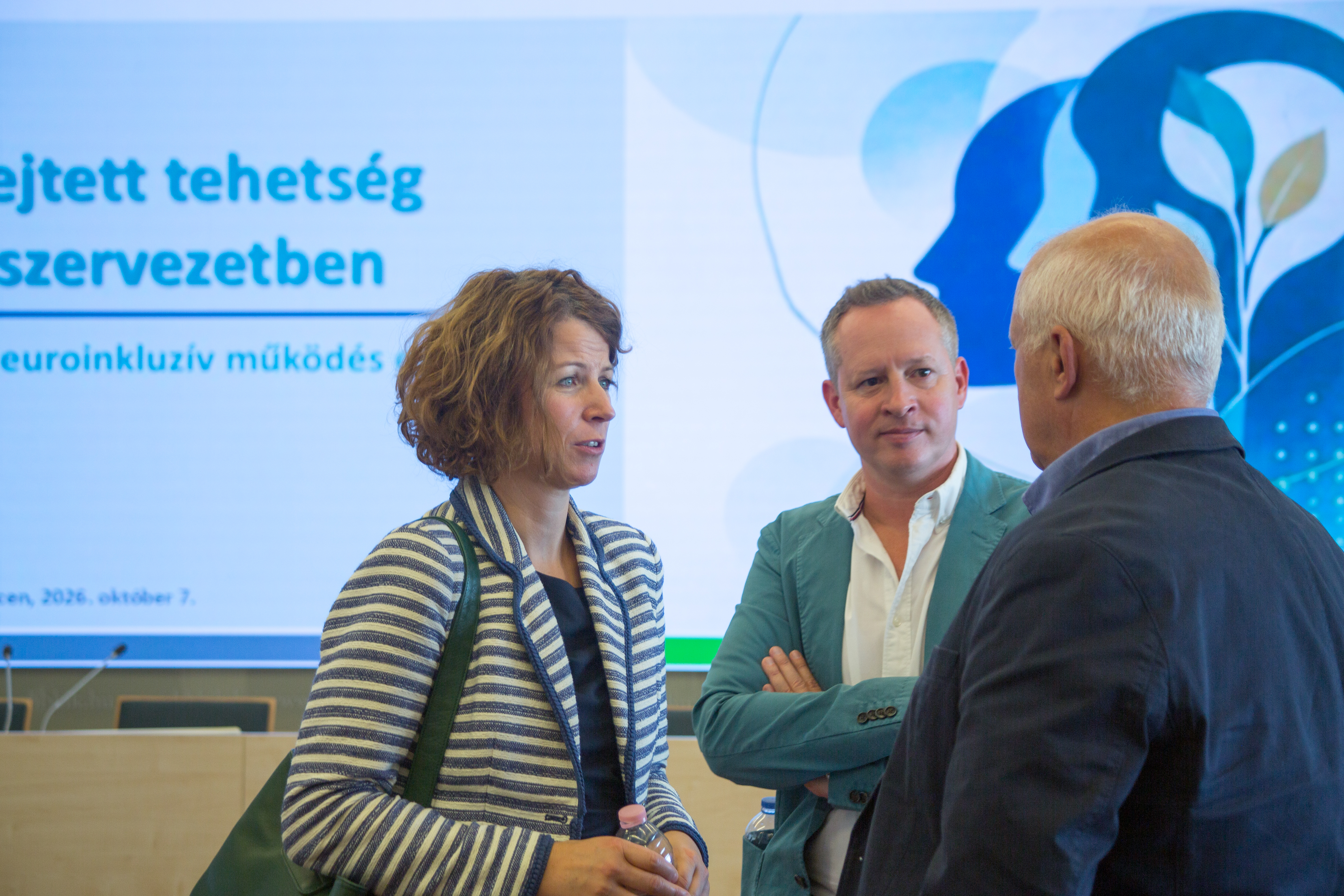
How can the values stemming from different ways of thinking and abilities be identified and leveraged in business operations? This was one of the questions explored at the event titled “Hidden Talent in the Organization – The Power of Neuroinclusive Functioning 2.”
The event focused on the relationship between neurodiversity, workplace inclusion, and business competitiveness. The level of interest in this topic was clearly demonstrated by the success of a previous sensory-friendly conference, which served as a precursor to this initiative. The event built upon that foundation, providing an opportunity to share experiences and discuss the practical aspects of implementing neuro-inclusive practices.
Diversity is a resource for businesses
At the event, Gergely Balla, Director of Business Development at MGFÜ, drew attention to the value inherent in diversity and its economic significance. Different ways of thinking, skills, and approaches are not merely individual characteristics. In the right organizational environment, they can also contribute to the growth and competitiveness of businesses. For this, it is necessary for organizations to recognize these values and provide opportunities for them to unfold and flourish.
Dr. Éva Skultéti, Secretary General of the HBKIK, also emphasized the importance of the human aspect of competitiveness. When it comes to economic development, the focus is often on technology, digitalization, artificial intelligence, or financing, while the recognition and proper utilization of human capabilities are also key factors in successful organizational performance.
At the event, Deputy State Secretary Zsuzsanna Lukács spoke about economic development initiatives aimed at supporting business growth and the benefits of these initiatives.
Practical Examples and New Approaches
Other speakers in the professional program presented the possibilities of neurodiversity and inclusive practices from various perspectives. Dr. Csaba Novák, head of the International Programs Department at MGFÜ, outlined the background of the professional work related to neurodivergent entrepreneurs, while Mariann Hornyák, an entrepreneurship expert at MGFÜ, spoke about issues in curriculum development.
István Sajtos, vice president of PeakX and head of its AI division, explored the specific approaches a leader with ADHD might adopt. Dr. Ákos Ferencz, a board-certified psychiatrist, presented neurodiversity as a community and organizational resource, while Katalin Vizi, Executive Director of MODEM, outlined the possibilities for creating an autism-friendly museum experience.
Hans-Peter Kemser, Chairman and CEO of BMW Manufacturing Hungary Kft., provided insight into the people-centered operations of the Debrecen factory. He demonstrated how consideration for employees individual abilities is reflected in the factory’s design and day-to-day operations, and how these factors can all contribute to ensuring that employees abilities are utilized to the fullest extent possible.
Inclusive operation is part of development
One of the key takeaways from the conference is that neuroinclusion is not merely a matter of equal opportunity in society or the workplace. Recognizing diverse abilities and ways of thinking can strengthen long-term competitiveness.
The event took place in a sensory-friendly environment and concluded with informal professional discussions. Participants also received a copy of the interview collection „Dialogue on Neurodiversity”, published by MGFÜ, and edited by Mariann Hornyák.
In line with the objectives of the TASK4ISI project, the event helped ensure that aspects of neuroinclusion receive greater attention in professional discussions on business development and competitiveness.
The publication in question can be read here.
